Preventing Data Harms in Canada Workshops: Experience our Participant Podcast and Creative Works!
Written By: Meghan Elisabeth Voll
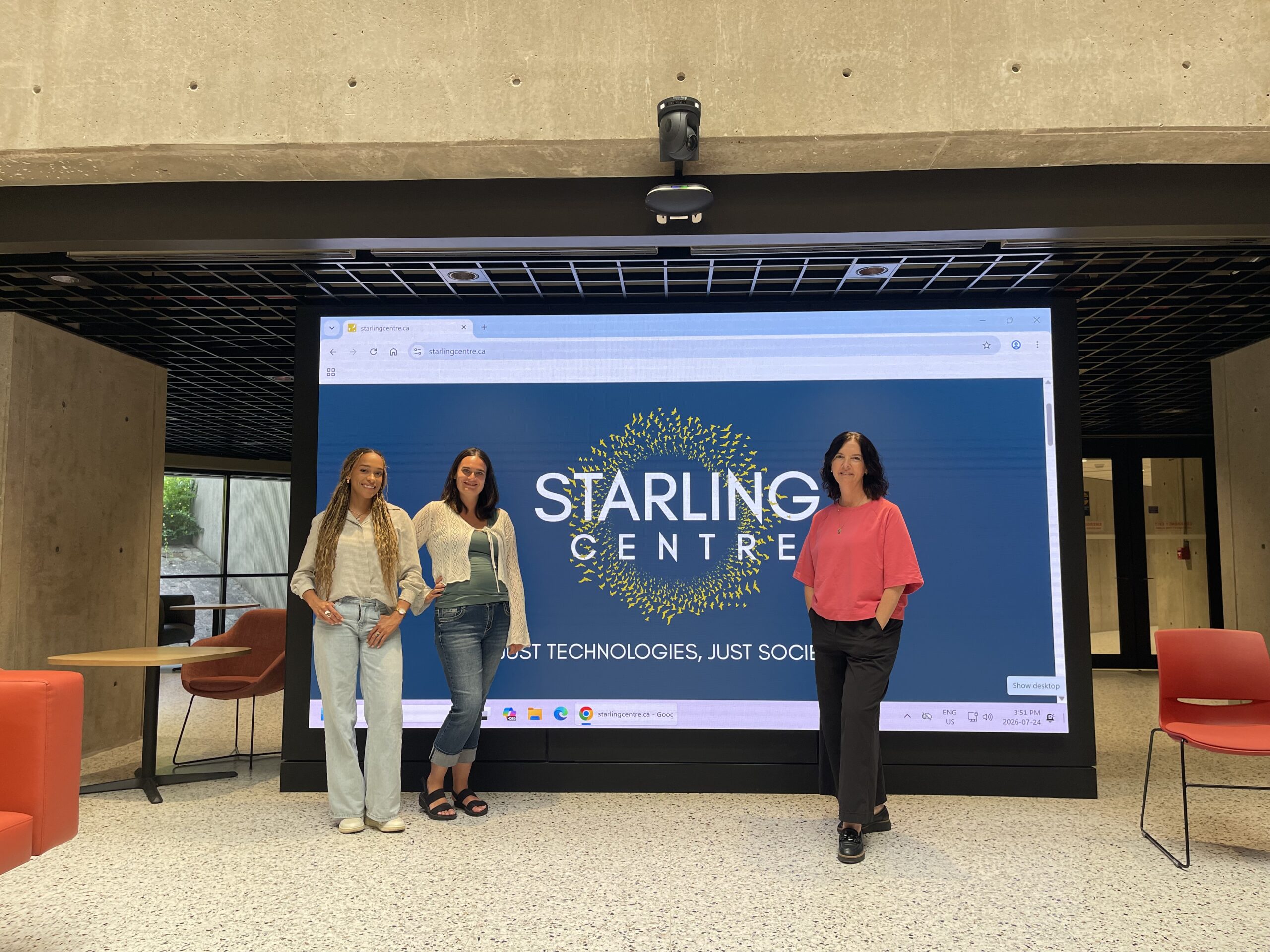
Photo left to right: Janelle Allan, Meghan Voll and Joanna Redden
What happens when older and younger adults are asked to describe their experiences with technology?
On Friday, July 24th, 2026, the Preventing Data Harms in Canada research team conducted their first workshop of the Preventing Data Harms in Canada Project in the Scholar’s Square at Weldon Library at the University of Western Ontario. This project is part of the larger Aging in Data Project at Concordia University in Montreal, Quebec. This workshop marks the beginning of an ongoing series that will continue to explore how people experience data harms and the efforts they think are needed to prevent them.
Read on to explore our early observations, stay up to date with the outputs of the inaugural workshop, and indicate your interest in joining future sessions when they are announced.
In a Nutshell: The Workshops
The first workshop in the Data Harms Project brought together participants to explore how data is collected, used, and how they are experiencing data driven systems in everyday life. Through discussion and interactive activities, participants reflected on the emotional, social, and practical consequences of living in increasingly data-driven environments perpetuated by smart devices and artificial intelligence (AI).
In total, 19 participants between the ages of 18-30 and 60-90 years old attended the first half-day session with the goals of identifying what harms were most prevalent for them when using technologies, how age plays a role in the experience or use of technologies such as smartphones or artificial intelligence, and what methods of redress might be helpful to address and prevent the harms that emerge from such use. The schedule of the workshop sessions was as follows. In the morning, participants reflected on their everyday encounters with digital technologies and on how data collection, AI, surveillance, and online platforms can shape not only our privacy, but also our emotions, relationships, and sense of control. Participants also identified particular examples of harm they came into contact with, and reflected on what could be done to prevent them in the everyday use of technology.
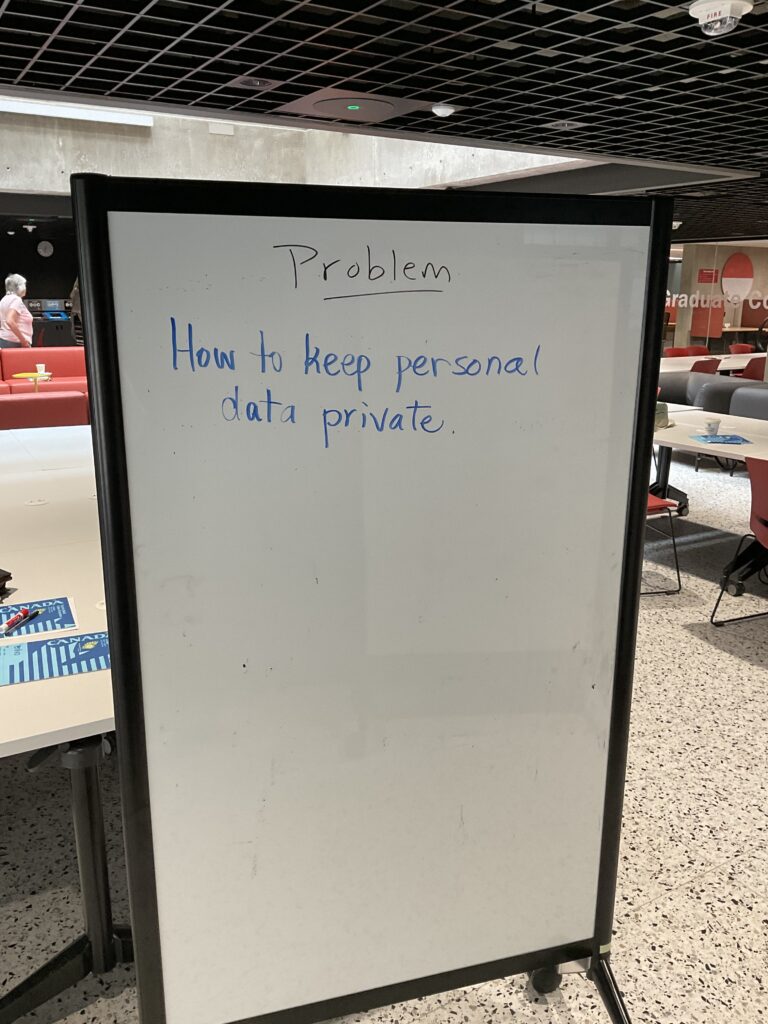
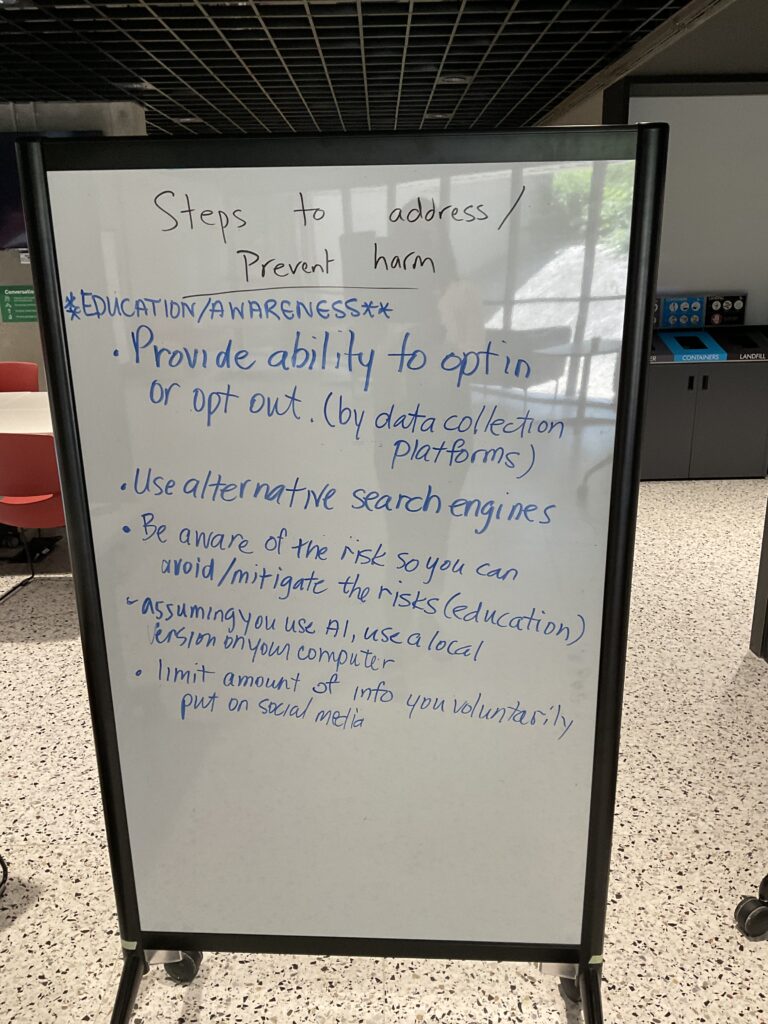
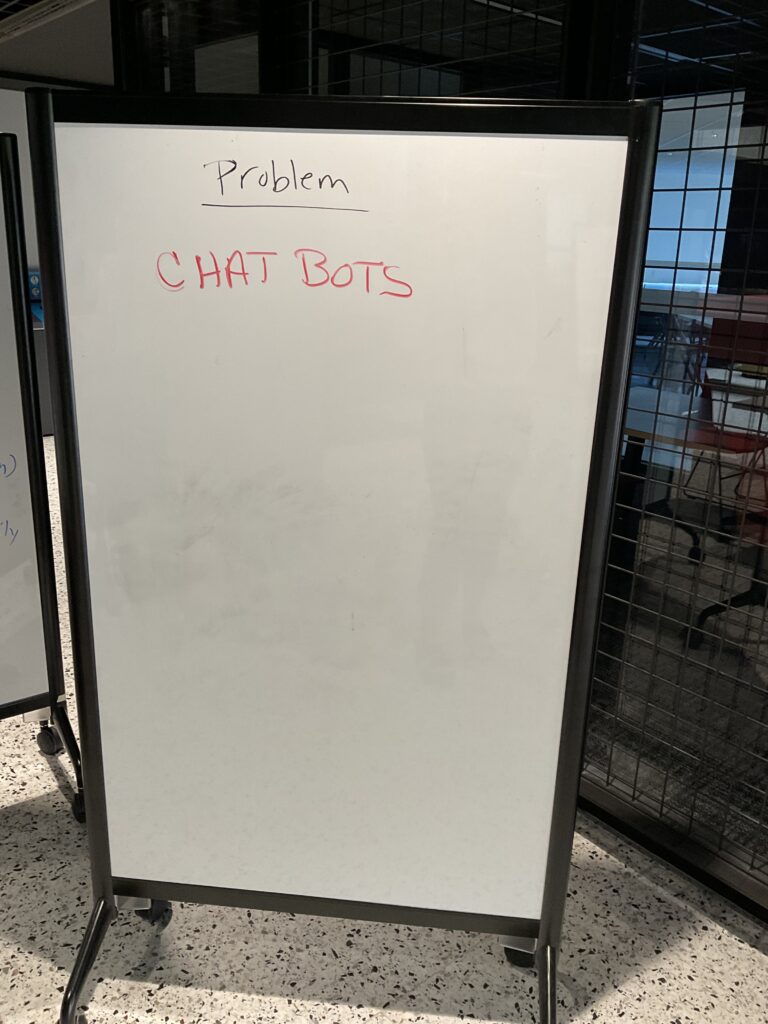
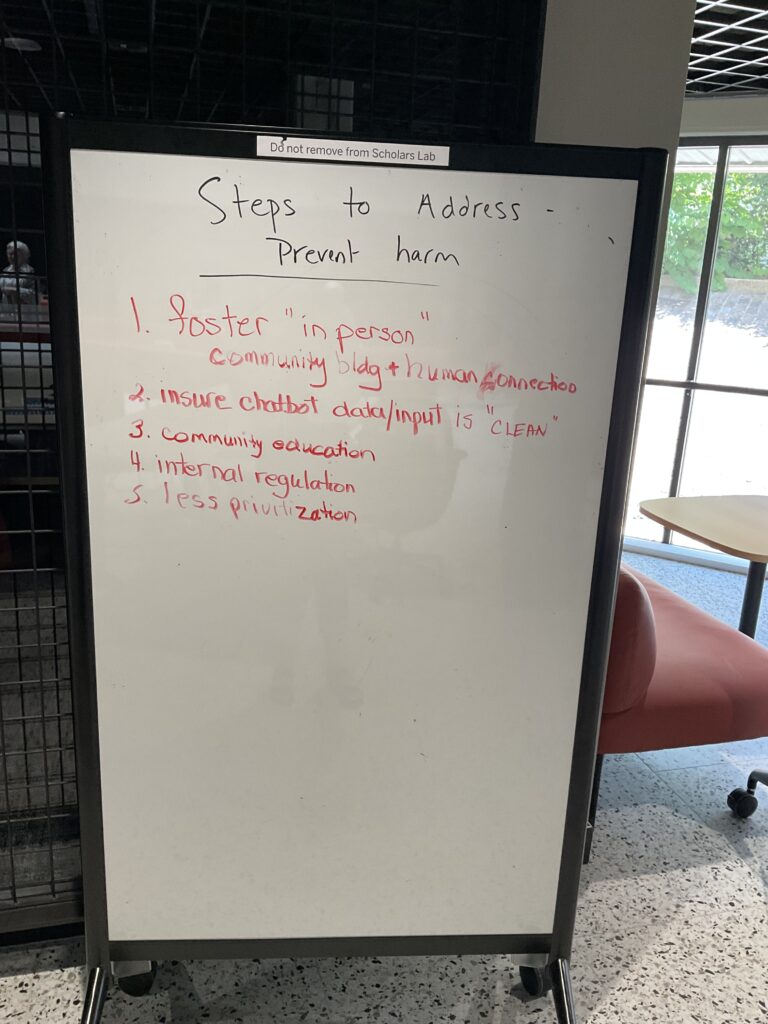
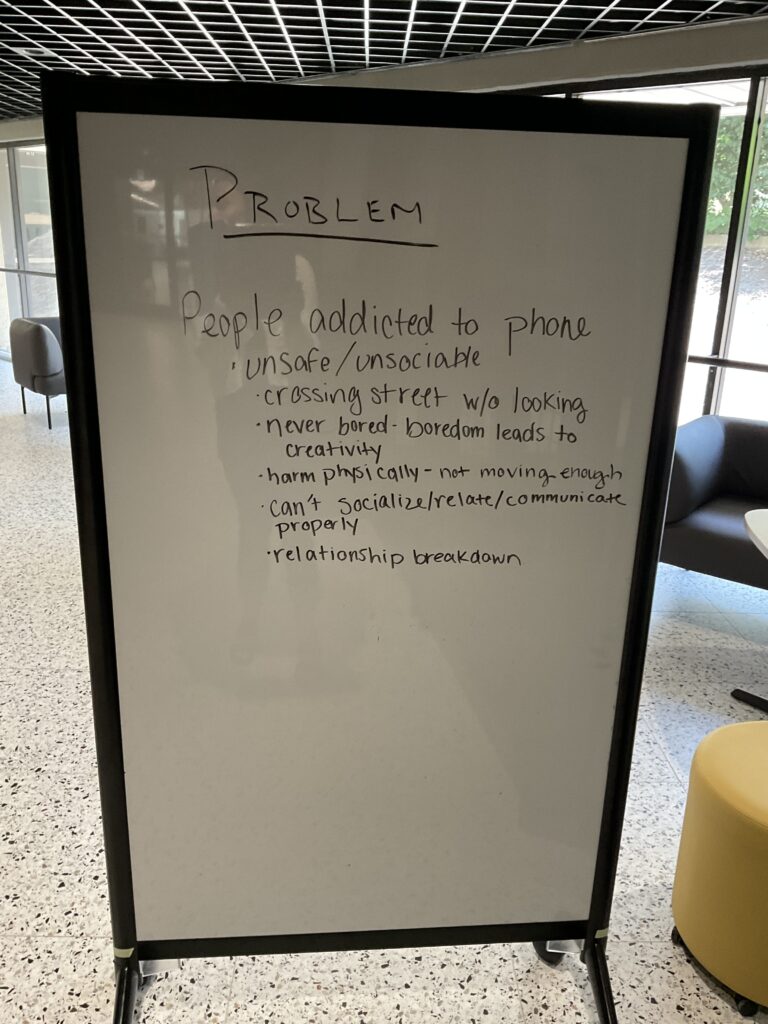
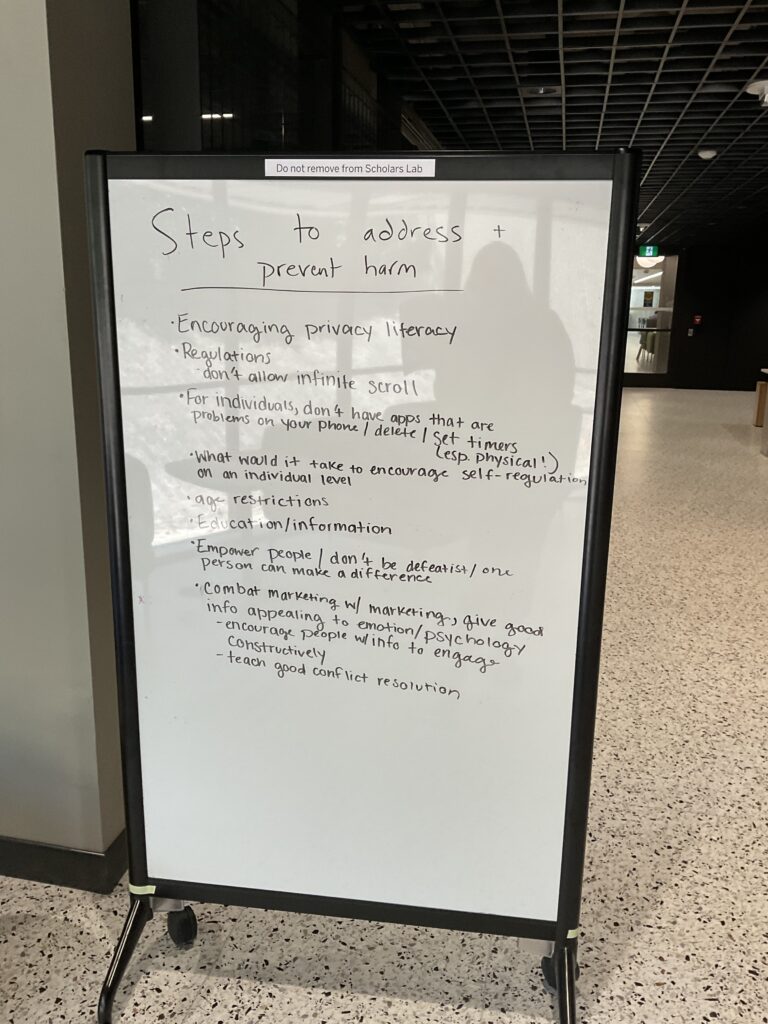
What problems do you see in technology? In groups, participants were asked to identify one problem that they felt was the most pressing in the context of technologies and discuss how it could be addressed.
Materials that Matter: Co-Producing Educational Resources with Our Community
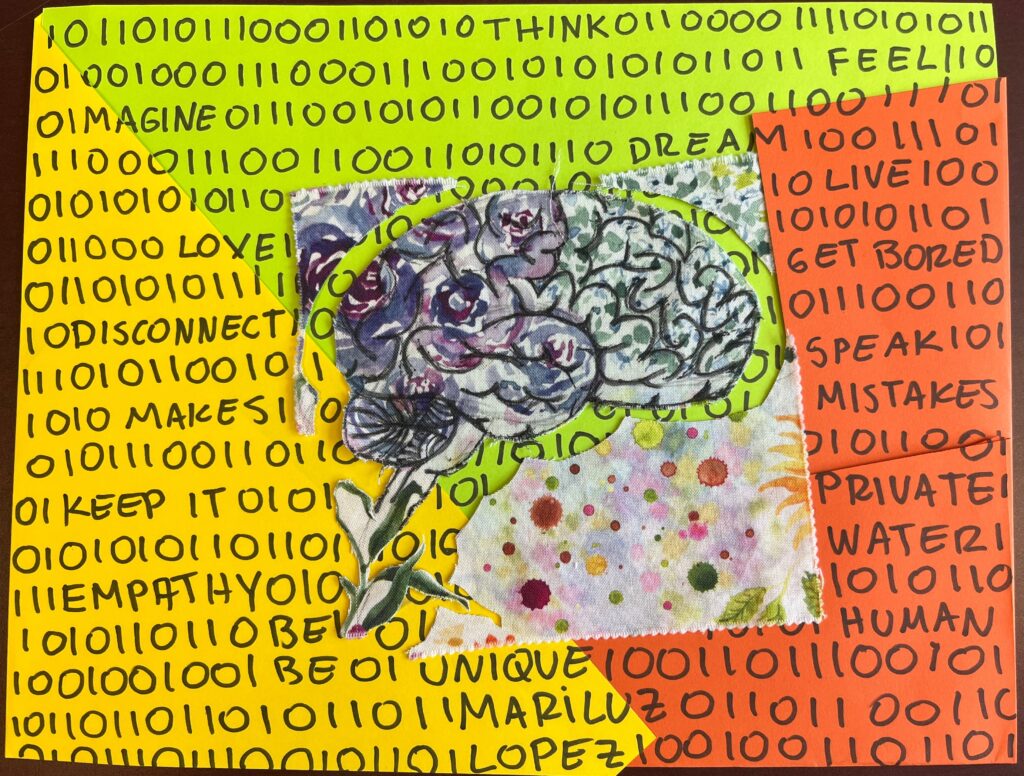
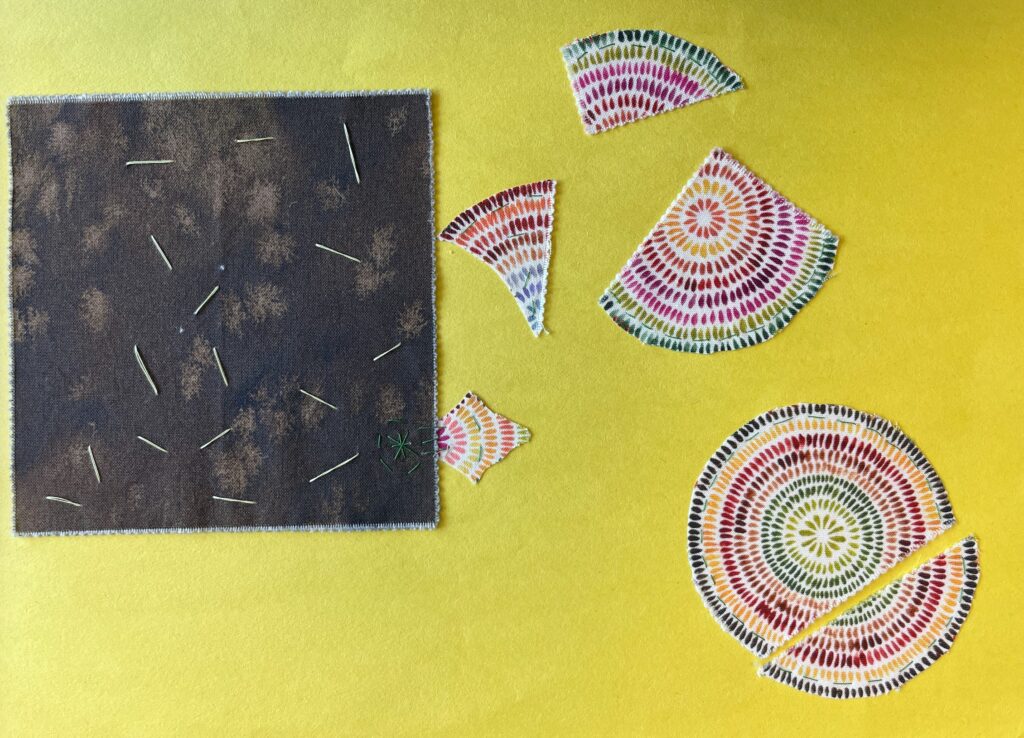
In the afternoon sessions, participants could choose to co-produce an output with the team- a piece of art, a written blog post, or a podcast recording- which could be used to share information about their experiences and thoughts in connection with AI and data driven systems. The following outputs were created by our participants:

The “Age and Algorithms” Podcast
Our participants also volunteered to become the “voices” of data harms facing their intergenerational groups. Together, we created this collaborative podcast, which centres participant voices and lived experiences of data harms, age, and technology. Drawing on participatory co-production, storytelling, and Lindsay Day et al.’s collaborative approach to audio production, participants helped shape these conversations from recording through to the final podcast, transforming workshop discussions into shared research outputs.
Episode 1: A Brave New (Digital) World
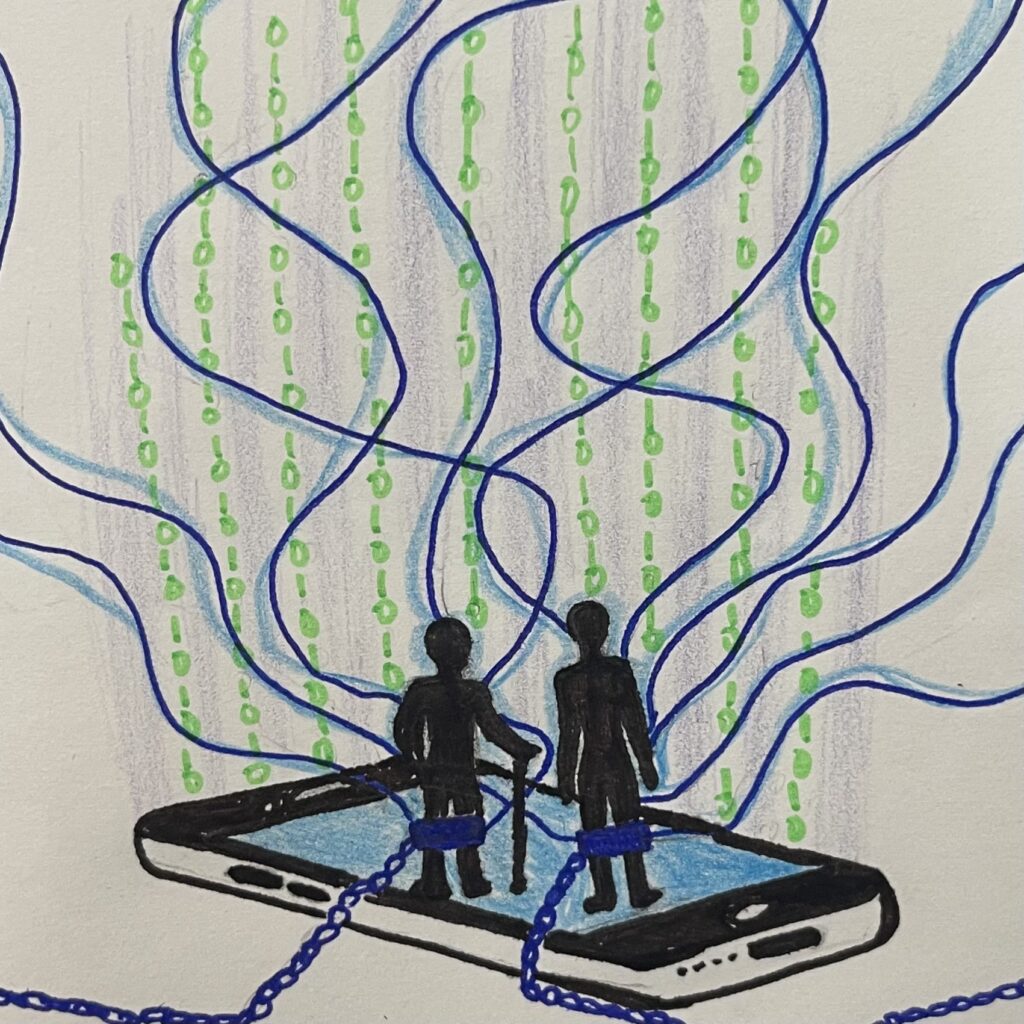
Eight participants from our first workshop on July 24, 2026, share personal stories about their experiences with technology—from everyday frustrations and challenges to moments when technology has made life easier. Their conversation highlights the different ways people navigate digital technologies and the feelings, concerns, and experiences that can emerge along the way.
Please note: This conversation includes language and terminology used by participants that may be considered outdated, insensitive, or non-inclusive today, and is presented in the context of their personal experiences and reflections.
Music Credit: Eliho “Convergence Point”; Ian Post “Kitt vs. Karr”; Ian Post “New World”; Raz Burg “District Zero”
Episode Transcript:
Episode 2: Debriefing Ep. 1 “Data Consciousness”
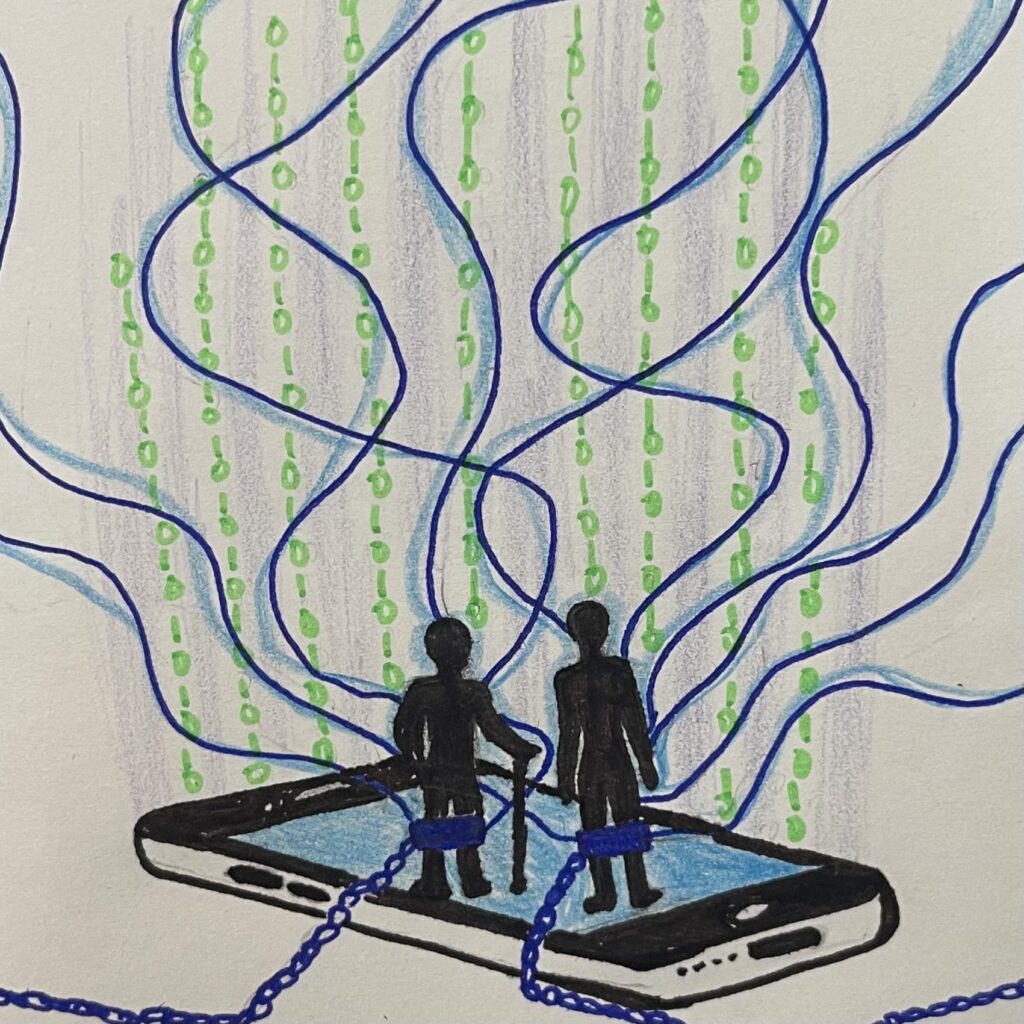
In this debrief episode, researchers Meghan, Francis, and Janelle reflect on the first workshop, sharing their observations and exploring key themes that emerged from participants’ stories and experiences with technology.
Music Credit: Ziv Moran “Possible Light” (2018)
Episode Transcript:
Our Early Observations
The team extends their heartfelt appreciation to last week’s group for sharing their ideas, work and time. The following is the team’s collective early observations from the workshops, which they hope to interrogate with further workshops:
1. Common Examples of Harm Across Generations:
Participants (both younger and older adults) wanted to discuss the impacts of technologies on their lives, and advocate for methods of redress and prevent harms such as scams, never-ending data collection, the challenge of spotting false AI content, as well as social isolation/ anxiety caused by technologies. Participants cited uses of a wide range of technologies and platforms. When using these technologies people expressed concerns about digital surveillance (i.e. such as phones ‘listening in’), algorithmic bias, targeted advertising, misinformation concerns, as well as cognitive decline, environmental concerns, and concerns surrounding hallucinations in the context of artificial intelligence. Here, concerns centered around the economy and artificial intelligence such as job decline/availability, the impact of AI on young workers, the privatization of tech and the influence of big tech companies, as well as concern about how digitalization more generally contributes to quality of life (in good and not always positive ways).
2. Trust Continues to be a Significant Issue:
Participants talked about “trust” in connection with institutions like government, corporations, and also about key resources provided by institutions or other civil society organizations, such as library courses, scam-report hotlines, or tech-support bodies. Some participants explained that any hesitation to use technologies was not due to a lack of interest or inability, but a lack of access to adequate or complete knowledge. For example, some participants cited fears of making a mistake that they could not fix and other participants mentioned previous instances where they had fallen victim to a harm, such as ransomware scams, and were uncertain of what to do or whom to seek help. The stakes seem too high to merely experiment on technologies, which some older participants guessed was the major way younger participants learned how to use them.
Participants felt it was difficult to access credible information to learn about certain technologies because there is no clear and linear starting point, nor clear authority, expertise or resources they could reach out to with questions, and no clear “safety net” or accountability to reverse mistakes if they did make them, coupled with the fast-paced and seemingly ever-changing nature of technologies.
3. Digital Literacy Still Is and Should be Complicated:
Many participants were eager to learn from others in the workshop about the harms that technologies can cause and what kinds of resources could be created to communicate and make sense of the harms identified, such as sharing stories or creating resources like “expert directories”. There was a diversity of experiences across the group with people using technologies in different ways, at different intensities, and identifying different needs when it comes to literacy. For example, participants identified an educational gap in relation to scams. While both younger and older participants agreed that education is a priority to aid in the prevention of scams, it was unclear what that education might look like for each age group. Even when discussing the possibility of “directories” or courses to help individuals recognize and report instances of harm such as scams, participants were uncertain whether such resources would be completely effective in today’s fast-paced technological landscape. However, participants did seem to agree that one possible mode of communication that could be effective is storytelling, which is another early observation we hope to interrogate further through co-production outputs.
4. Storytelling Might Be One of the Strongest Forms of Communication:
Both younger and older participants agreed that sharing stories was an effective way to communicate about experiences and concerns. Participants shared their ideas and stories via artistic outputs such as creating visual projects, creating a social media campaign, or by recording their experiences with technologies in a podcast format to help others ecognize risks, reduce stigma, and create spaces for collective learning. For example, participants expressed wanting to share their experience with ransomware and romance scams, their feelings, and what they did to escape their respective situations so that others like them could know that they were not alone and what to do if in a similar situation. For these participants, sharing stories was useful in situations such as ransomware scams as it provided a physical resource or “manual” for others. Likewise, sharing stories of falling victim to romance scams served as a means to support others. Here, participants’ emphasized storytelling as a method of communication also revealed how data harms compound and importantly, often include an emotional component which goes ignored.
5. There is an Affective Component to Data Harms
Participants described using technologies as helpful, but also as frustrating and invasive. On the one hand, participants described how technologies, such as AI chatbots, could be useful for querying research articles or doing baseline research such as on a destination for a future vacation. On the other hand, participants also described these technologies as invasive and frustrating to use in everyday life. For example, some participants described doing research on Google and being forced to engage with AI summaries before search results. Other participants described artificial intelligence as being imposed on them to do tasks at work. Participants who identified scams as an important harm that emerges from technology described how such technologies were not only frustrating to use, but also contributed to feelings of panic and loss of control, when trying to figure out what to do and if they were in a situation where they were being scammed. Throughout the workshop session, it is apparent that there are emotional components that compounds harms in the context of technologies.
Looking Ahead
These observations represent the beginning of an ongoing research process rather than definitive findings. As more workshops are held, we’ll continue comparing themes across groups, refining our activities, and exploring how public engagement can support a deeper understanding of data harms in everyday life and sharing what participants say about the need for better oversight, protections and control. If you would like to be contacted about participating when the next round of workshops commence, please sign up at this link!
Visit our project page to learn more about our project and team for updates and output publications.